What is Autism? Understanding Autism Spectrum Disorder

Autism spectrum disorder (ASD), or autism, is a developmental disability that refers to a broad range of characteristics that are categorized into two groups: deficits in social communication and restrictive/repetitive behaviors. Each of these categories outline a broad range (spectrum) of potential symptoms that one may display. Additionally, there are varying strengths and challenges an individual with autism face and they are typically diagnosed with a severity level (level 1-3).
According to the CDC, “People with ASD often have problems with social, emotional, and communication skills. They might repeat certain behaviors and might not want change in their daily activities. Many people with ASD also have different ways of learning, paying attention, or reacting to things. Signs of ASD begin during early childhood and typically last throughout a person’s life.” Autism affects an estimated 1 in 54 children in the United States (CDC, 2021). Autism is about four times more common among boys than girls, however, it occurs in all racial, ethnic and socioeconomic groups.
Types of ABA Therapy Jobs and Their Degree Requirements
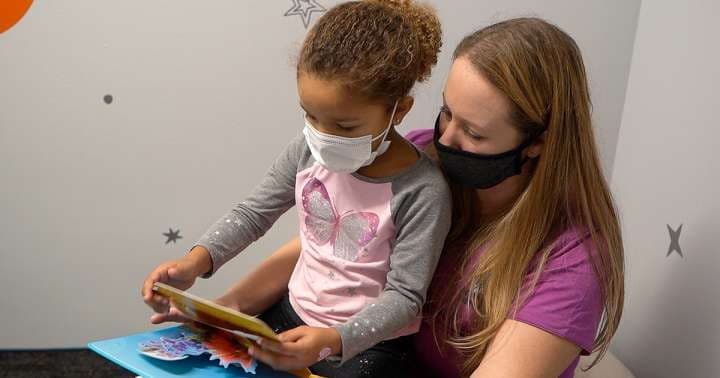
While there are many avenues in which applied behavior analysis (ABA) can be used and implemented in the professional world, there are a few traditional types of ABA therapy jobs that can be found when working with individuals with disabilities. In order to practice in each respective position, you must meet and maintain certain requirements. When providing services for individuals with autism, we typically see the following types of ABA therapy positions: behavior therapist (BT), Registered Behavior Technician (RBT), Board Certified Assistant Behavior Analyst (BCaBA), Board Certified Behavior Analyst (BCBA) and Board Certified Behavior Analyst-Doctoral (BCBA-D). Each position varies slightly from one another by educational requirements, certification requirements and maintenance requirements. The following outline of ABA therapy jobs is not exhaustive, however, these are typical ABA therapy jobs found in the realm of providing applied behavior analysis services to individuals with disabilities (i.e. autism spectrum disorder, intellectual disabilities). Typical Types of…
Getting Into the Field of ABA Therapy to Become an ABA Therapist

ABA therapy is a career field that is growing exponentially each year in the United States. As Autism diagnoses continue to increase each year, ABA therapy has become the gold standard of helping people with ASD learn skills to increase communication and social skills to become more independent. ABA, or applied behavior analysis is based in radical behaviorism, part of behavioral psychology. In ABA, practitioners use the premises of behavior analysis and apply them to teaching others. ABA is used in fields such as higher education, organizational behavior management, animal training, safety in the workplace, environmentalism and sustainability, medicine, and as it is most known for, autism therapy.
What is ABA Therapy?
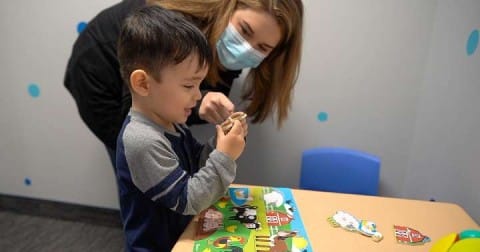
In the past twenty years, ABA therapy has become a popular, effective, and surgeon-general approved therapy for Autism Spectrum Disorder, or ASD.
What Exactly is ABA Therapy and What Does it Stand For?
ABA stands for Applied Behavior Analysis, which is the science of learning and behavior. Behavior analysis helps us to understand behaviors, why they are occurring, how the environment can influence behavior, and how we learn new behaviors.
Food Selectivity in Children with ASD

It is estimated that 75% of children with ASD have limited food preferences (Maye & Calhoun, 1999). Insistence to sameness, restricted routines, and difficulty coping might be some symptoms of ASD that are directly correlated with restrictive food intake. The good news is that various disciplines (Speech Therapists, Occupational Therapists and ABA therapists working alongside Board Certified Behavior Analysts) can offer successful interventions towards increasing food acceptance. When looking at the social validity as to why increase the variety of food in a child’s food repertoire, there are many things to consider.
For example, one might say “leave the child alone; if they want to only eat pizza and French fries, then so be eat”. It’s the parents’ final decision if increasing food variety is significant to their family, but here are some other things that are connected to eating a limited variety of food: vitamin consumption might be lower, GI dysfunction, not enough nutrients, not enough fiber, and/or not enough protein.
What exactly is Modern Day ABA?

ABA Myths and Misconceptions When you hear the phrase “Applied Behavior Analysis,” what is the first thing you think of? Most people would say “Autism” or “a type of therapy”. The main reason for writing this article is to debunk any misconceptions or myths about ABA and explain how it has evolved over the years. The first myth is that it is a “therapy”. ABA is a Science devoted to the understanding and improvement of human behavior, which focuses on objectively defining observable behaviors of social significance (Cooper, Heron & Howard, 1987). The principles of the science, or rather field of study, are applied in an ABA therapy program. The reason it’s important to point out that it’s a Science is to give it significant credit as “empirically validated”. There have been over a thousand studies published, revealing significant changes in the increase of language, communication, socialization, and appropriate behavior and…
Routines During the Pandemic

Although places are starting to open around us, many child-friendly venues such as playgrounds, amusement parks, and schools will remain closed for quite some time. This time of uncertainty can be both scary and, at times, frustrating for everyone involved. It can be helpful to give your little ones some structure. We all benefit from having structure and routines. Routines help our little guys understand what we expect from them. Routines that are organized and predictable can be beneficial for all children, especially children who struggle with transitions. You may have seen a spike in your child’s problem behaviors during the Pandemic, as things have quickly changed for them without any warning. Creating schedules for your little ones can be helpful for parents, as well. Some parents are working from home, and providing activities for your children to engage in while you are working is essential. Daily Home Schedule BreakfastFree playLearning…
What’s Priming in Applied Behavior Analysis (ABA)?

Priming is an evidence based ABA intervention that is used to prepare children for possibly challenging activities or events. It can be difficult to predict how your child will react to some situations, such as visiting the dentist or taking an airplane for the first time, but priming beforehand can help familiarize them with the new setting and ease transition. Priming is most effective when it is built into the child’s everyday routine at school and home. It typically involves presenting the materials that would be naturally found in the new setting. This can be through social stories, books, video modeling, a related toy or an actual item from that environment, such as a toothbrush for the dentist or a stethoscope for a doctor’s visit. This can reduce the child’s stress and anxiety and increase their sense of predictability and success. Some Guidelines for Priming: Develop a Routine- If priming for…
Reducing Holiday Stress with Children

Reducing Holiday Stress with Children Home By: Tara Karen, M.S. Ed, BCBA, LBA For many, the holidays represent a time of love, family, giving, joy, and excitement. For those with children with developmental disabilities, it can also mean an increase in stress and chaos. Time off of school, change in routines, unstructured time, addition of […]
Fall Activities for Kids

Autumn-lovers, your favorite season is finally here. As the weather gets cooler and the leaves begin to change color, it’s time to start thinking about how you can help your kids get outdoors and take advantage of all that this amazing season has to offer. From fun arts-and-crafts projects to festive outings, this list of 20 fall activities for kids has something for everyone! Visit an apple orchard.Make a classic apple crisp.Build a scarecrow stuffed with newspaper.Have an apple cider “tea” party.Bake apple chips.Make an apple stamp.Make handprint leaves.Jump into a leaf pile.Play “I Spy” during a nature walk.Collect and identify leaves.Press leaves into a photo album.Visit a zoo.Check out a haunted house.Make a necklace with Halloween-colored beads.Take a hayride at your local pumpkin patch.Toast the pumpkin seeds from your carved pumpkin.Decorate pumpkins with paint, markers or stickers.Enter your decorated pumpkin into a local contest, or have your own contest!Roll down…