Connection Before Correction: The Neuroscience of Transformative Parenting
HomeParenting and Family LifeConnection Before Correction: The Neuroscience of Transformative Parenting
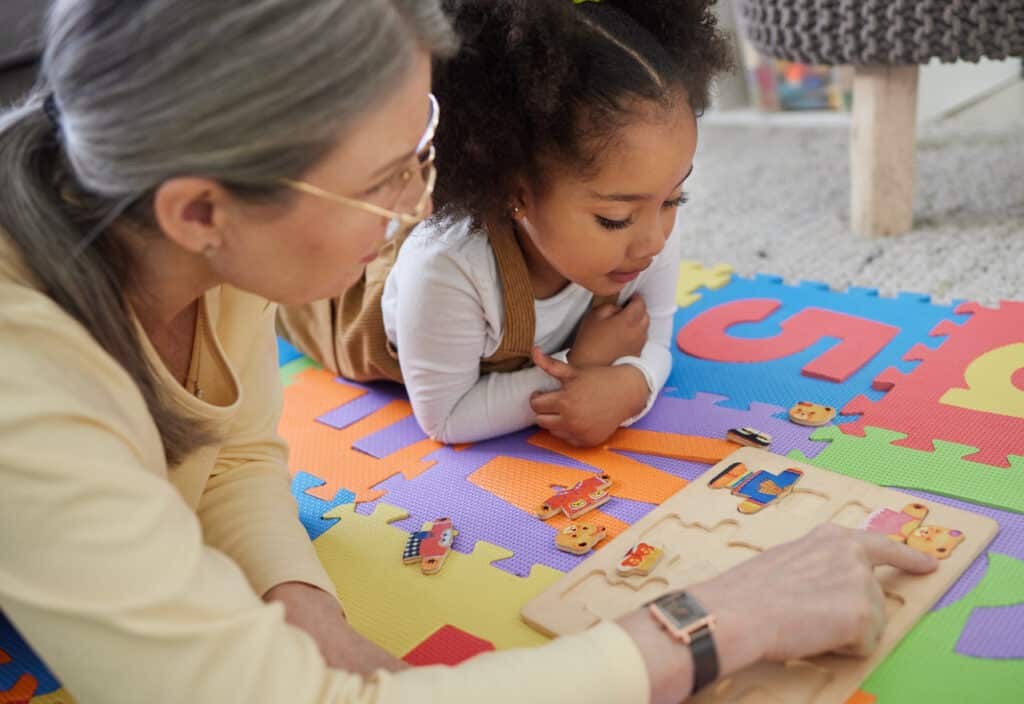
Ever notice how kids listen better to people they trust? It’s not magic, manipulation, or bribery – it’s neuroscience. And understanding this one principle can completely transform how you approach parenting at home.
The Science Behind Connection
Here’s what’s happening in your child’s brain: when they feel safe, connected, and understood, their prefrontal cortex (the learning and problem-solving part of the brain) is online and ready to absorb new information. But when they’re stressed, anxious, or feeling disconnected, their amygdala (the survival center) takes over. In survival mode, the brain literally cannot process new learning. It’s too busy scanning for potential threats.
This usually isn’t about kids being stubborn or defiant. It’s about our brain’s architecture. You can’t reason with, teach, or correct a child whose brain is in fight-or-flight (or freeze) mode. What can set a child off into survival mode can be so simple or silly to us, but we have to remember that children are tiny people experiencing the world for the first time, so many things can be overwhelming.
We All Experience This
Think about the last time you had a heated argument with your partner or a family member. You were so upset, so flooded with emotion, that you completely forgot the point you were trying to make. Hours later, after you’d calmed down, suddenly all your brilliant arguments came flooding back. “Oh THAT’S what I should have said!”
That’s your amygdala hijacking your prefrontal cortex. When you’re in fight-or-flight mode, the thinking part of your brain goes offline.
Or imagine this: you’re hiking and a bear starts charging at you. In that moment, could someone quiz you on your times tables? Could you recite the fifty states? Absolutely not. Your brain has one job in that moment: survival. Everything else shuts down.
That’s exactly what happens to your child’s brain when they’re overwhelmed, stressed, or feeling unsafe. You can’t teach multiplication facts to someone running from a bear, and you can’t teach emotional regulation to a child whose nervous system is in panic mode.
Connection isn’t a nice-to-have – it’s a neurological prerequisite for learning.
What This Looks Like in Real Life
Think about the last time you tried to teach your child something while they were upset, overwhelmed, or shutdown. How’d that go? Probably not great. Now think about a moment when they felt safe, happy, and connected to you. That’s when the magic happens – when they’re open, interested, and ready to learn.
Connection Doesn’t Mean Permissiveness
Let’s clear something up: prioritizing connection doesn’t mean letting kids run wild or avoiding boundaries. It means building the relationship that makes boundaries actually work. Kids who feel connected to you WANT to cooperate with you. They’re motivated to meet your expectations because the relationship matters to them. When connection comes first, correction becomes collaboration instead of a power struggle.
Try This at Home: The 30-Second Connection Before Correction Rule
Before making any request, demand, or transition, try to spend 30 seconds connecting first. Here’s what that looks like:
Get on their level physically. Literally. Crouch down, sit on the floor, meet them where they are.
Notice what they’re doing. “Wow, you’re lining up all the red cars. That’s so organized!” You’re not praising or judging – you’re just seeing them.
Join their world briefly. Stack a block on their tower. Comment on their drawing. Ask a genuine question about their play.
THEN make your request. “Okay, in two minutes it’s going to be time to clean up and get ready for lunch.”
You’ll be shocked at how much less resistance you get. Why? Because you’ve activated the connection circuits in their brain first. You have gone from tall and intimidating to their level, showing interest in them, and now they’re ready to hear you.
Connection Strategies Throughout the Day
Morning: Before launching into the rush of getting ready, spend two minutes of undivided attention. Sit with them while they wake up. Talk about their dreams. Snuggle before the chaos starts.
Transitions: These are hard for kids (and most adults too, if we are being honest). Before asking them to stop playing and come to dinner, give a warning AND a connection. “I see you’re building something really cool. In five minutes, we’re going to pause and eat dinner together. Can you show me what you’re working on?”
After nap/quiet time: Don’t immediately launch into activities or chores. Kids need a minute to regulate after waking up or having alone time. Offer a snack, some cuddles, maybe just sit close. Let them ease back in.
Bedtime: This is prime connection time. Reading together, talking about the day, physical closeness – this is when kids often open up about things that are bothering them because they feel safe.
Connection Doesn’t Have to Be Elaborate
Here’s the beautiful truth: connection doesn’t require Pinterest-perfect activities, expensive toys, or hours of dedicated playtime. Sometimes the most powerful connection is the simplest.
Set a timer for just 5 minutes. Put your phone in another room. Turn off the TV and tablet. Get on the ground with your baby and just watch them. That’s it. Notice what they’re interested in. Follow their lead. Narrate what you see them doing. “You’re putting the blocks in the bucket! In and out, in and out.”
Five minutes of truly present, undivided attention is worth more than an hour of distracted “quality time” where you’re half-watching them and half-scrolling your phone.
You don’t need to be entertaining them, teaching them to play functionally, or directing their play. You just need to be WITH them. Fully present. Fully there.
That’s connection. And your child’s nervous system knows the difference.
The Long Game
When we prioritize connection, we’re not just making today easier (though we are). We’re building the foundation for a lifetime relationship. We’re teaching kids that they matter, that their feelings are valid, that relationships are safe.
Kids who grow up feeling genuinely connected to their caregivers develop better emotional regulation, stronger problem-solving skills, healthier relationships, and more resilience when life gets hard. That’s not wishful thinking – that’s what the research shows us over and over again.
So yes, connection before correction takes more time upfront. Yes, it requires us to slow down when everything in us wants to rush. But the payoff? A child who feels safe, who trusts you, and whose brain is actually wired to learn from you.
That’s not just good parenting. That’s good neuroscience.
Share this blog
Categories
Recent Blog Posts
-
 Connection Before Correction: The Neuroscience of Transformative Parenting
 -
 What is Pediatric Occupational Therapy? More Than Fine Motor Skills
 -
 What are the Benefits of Learning a Second Language as a Child?
 -
Autism Acronyms and Terms Made Simple: A Parent’s Guide from Achieve Beyond
-
Early Intervention Speech Therapy Evaluation: What to Expect and How to Prepare